Voxelgrids: How This Portable MRI Scanner Makes For A True Make-In-India Story
How Voxelgrids Is Building Healthcare Infrastructure at Home India’s diagnostic gap is not limited to doctors or hospitals, it is deeply tied to infrastructure. Similarly, India’s MRI shortage is not
How Voxelgrids Is Building Healthcare Infrastructure at Home
India’s diagnostic gap is not limited to doctors or hospitals, it is deeply tied to infrastructure. Similarly, India’s MRI shortage is not a future problem, it is a reality. With fewer than 5,000 MRI machines serving more than 1.4 billion people, access to advanced diagnostic imaging remains limited to a few cities. For patients in smaller towns and rural districts, an MRI scan often means long travel, delayed diagnosis, or skipped care altogether.
That imbalance has existed for years. High costs, imported machines, and complex infrastructure have kept MRI technology out of reach for most of the country.
Now, a Made-in-India startup is quietly challenging that status quo.
Voxelgrids MRI: Built in India, for Indian Conditions
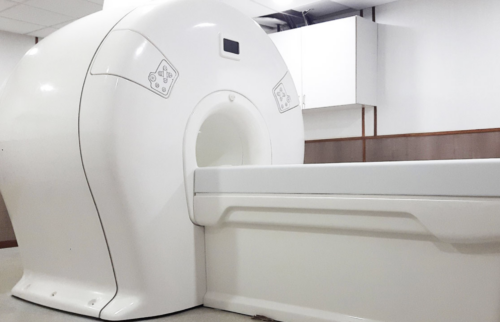
Voxelgrids, a Bengaluru-based medical imaging startup, has developed India’s first portable MRI scanner. The company’s full-body 1.5 Tesla system is compact, lightweight, and designed for both stationary and mobile use. The scanner weighs nearly half as much as conventional MRI machines. It also costs significantly less to deploy. Despite this, it maintains industry-standard bore size and diagnostic imaging quality.
The focus is not miniaturisation alone. The design prioritises reliability in challenging environments. It can function with limited infrastructure, making it suitable for district hospitals and mobile diagnostic units. This approach directly addresses India’s healthcare access challenge.
Why This MRI Represents a Made-in-India Breakthrough
Most MRI systems used in India are imported. They rely on liquid helium, a scarce and expensive resource. Maintenance and downtime often add to long-term costs. Voxelgrids has taken a different route. Its MRI scanners use liquid nitrogen instead of liquid helium. Nitrogen is easier to source, more affordable, and better suited to Indian operating conditions.
The company has also redesigned the magnet. It is about 10 percent smaller but retains the same clinical strength. Power efficiency allows battery-supported mobile operation. These choices reflect a deeper shift. Instead of adapting imported technology, Voxelgrids has built a system from the ground up for India.
From Academic Research to National Mission
The journey behind Voxelgrids spans over a decade. Founder Arjun Arunachalam earned his MS and PhD from the University of Wisconsin–Madison. He later worked at GE Global Research in the United States.
In 2008, he stepped away from corporate research to pursue entrepreneurship. Funding challenges followed. He joined IIT Bombay as faculty and continued MRI research despite limited domestic ecosystems. A breakthrough came during a stint in Singapore, where a government grant supported early MRI intellectual property development. That work laid the foundation for what would later become Voxelgrids.
The Role of BIRAC and Tata Trusts
In 2016, Arunachalam approached Tata Trusts with a proposal to build cost-effective MRI systems in India. The Trusts supported the idea and connected him with Social Alpha’s Foundation for Innovation and Social Entrepreneurship.
This partnership marked the formal beginning of Voxelgrids. The early team worked under the Foundation while developing a prototype MRI scanner. The first prototype was deployed at a Bengaluru medical institute in 2017.
In 2019, BIRAC provided a major grant to support indigenous cryogenic magnet and MRI technology development. This funding helped Voxelgrids move beyond prototypes towards scalable engineering. The company later received the BIRAC Innovator Award in 2020 and achieved ISO 13485 certification, a key milestone for medical device manufacturing.
Zoho Corporation and the Shift to Scale
In 2021, Voxelgrids closed its Series A funding round with Zoho Corporation. The investment marked a shift from research-led development to long-term scaling.
Zoho’s backing signalled confidence in Indian deep-tech manufacturing. Unlike short-term product plays, MRI systems require patient capital and sustained engineering effort.
With this support, Voxelgrids transitioned into an independent entity focused on production readiness and wider deployment.
Already in Use, Quietly Making an Impact
Voxelgrids’ 1.5 Tesla MRI scanner is already operational at a cancer care centre in Chandrapur, Maharashtra. The deployment demonstrates that the system can function in real-world conditions.
Clinicians have reported reliable performance and diagnostic-quality images. The scanner operates under constrained installation environments without compromising outcomes.
This deployment reflects a larger possibility. Advanced imaging can reach smaller cities without waiting for large hospital expansions.
What This Means for Indian Healthcare
Diagnostic imaging plays a central role in early detection and treatment planning. Delays often increase both cost and risk. By reducing dependence on imports and enabling mobile deployment, Voxelgrids addresses both access and affordability. The technology strengthens India’s medical device ecosystem while serving immediate healthcare needs.
As the company moves closer to mass production, its impact could extend across India and other emerging markets.
A Made-in-India Model Taking Shape
Voxelgrids’ story highlights what coordinated support can achieve. Public funding through BIRAC, early backing from Tata Trusts, and growth capital from Zoho have enabled long-term innovation.
It is a reminder that building healthcare infrastructure requires patience, research, and trust. The result is not just a machine, but a foundation for broader access.

FocusFlow: The Last Timer You'll Need
Master the art of deep work with our analog-inspired digital interface. Zero tracking, 100% focus.
Learn more
Exploring the intersection of human psychology and digital culture. Documenting the shift toward slow media and helping readers find balance in an attention-based economy.
View all articles